Setup
Galloping Gertie
October 19, 2026
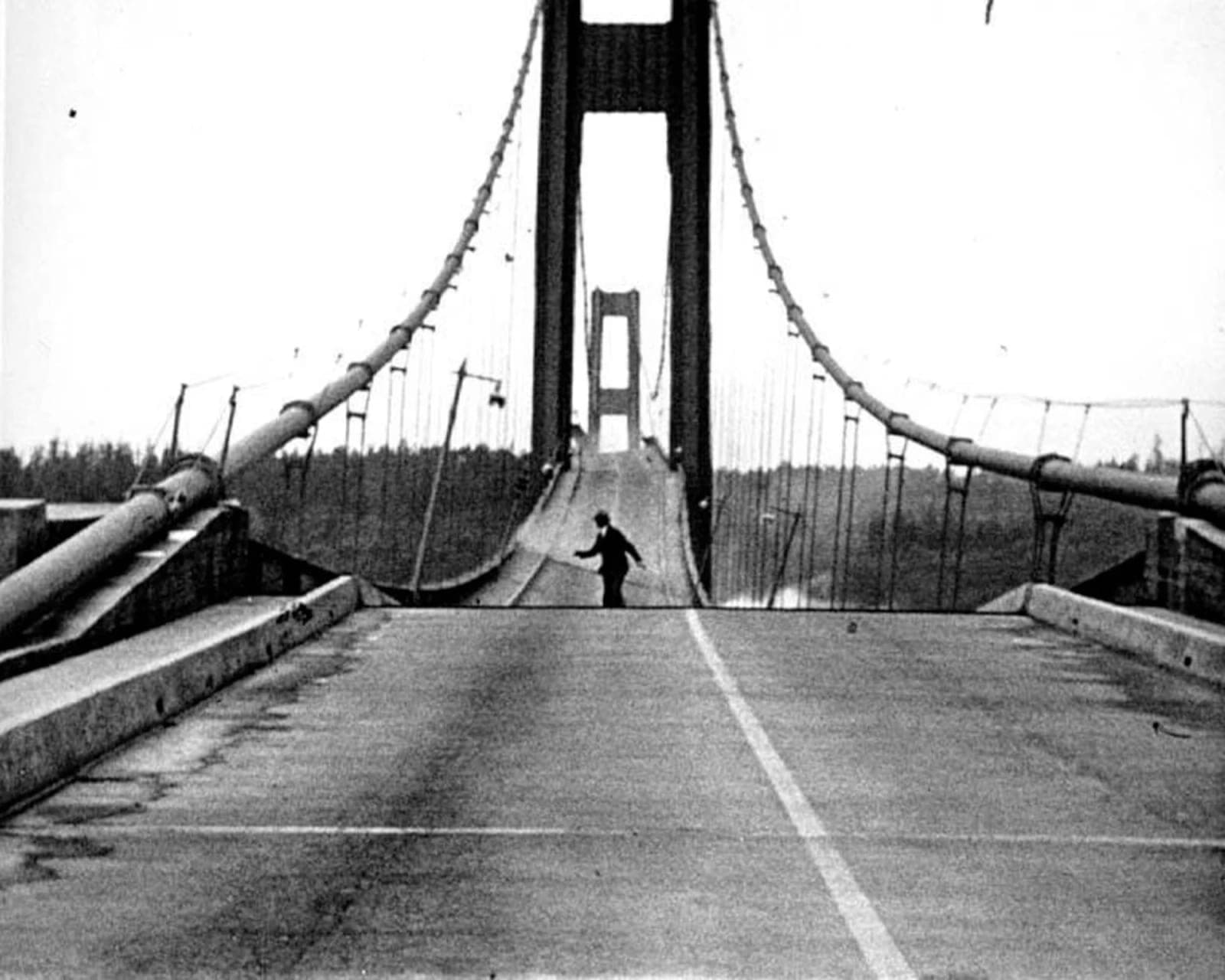
In 1940, the Tacoma Narrows Bridge opened over Puget Sound in Washington. Its 2,800-foot main span was the third longest of any suspension bridge in the world, one of the most impressive structures of its time. That is, until the wind blew.
The deck moved in even a moderate breeze, rising and falling like waves. Workers started calling it “Galloping Gertie” before it even opened, but by the time the team realized how unstable it was, it was too late.
The original plan called for 25-foot-deep steel trusses under the roadway, which kept the deck stiff against forces like wind. The final design swapped in 8-foot-deep plate girders, which made the bridge cheaper, slimmer, and far less prepared for the conditions it would face.
In an effort to address the issues, the engineers attempted band-aid fixes. Tie-down cables came first, anchoring steel lines to 50-ton concrete blocks on shore. The first set snapped, and a later set calmed the rocking motion somewhat, but never fully addressed the issue.
Next came hydraulic buffers at the towers: shock absorbers meant to soak up the deck’s movement. However, their seals were damaged when the bridge was sandblasted for painting, and they stopped working.
And last came diagonal cable stays that braced the middle of the deck. They stayed up until the end, yet nothing changed.
Every one of those fixes treated a symptom, not a cause. And on November 7, in winds around 40 miles per hour, the deck twisted and rolled until it finally tore apart and fell into the strait, almost certainly galloping its way to the bottom.
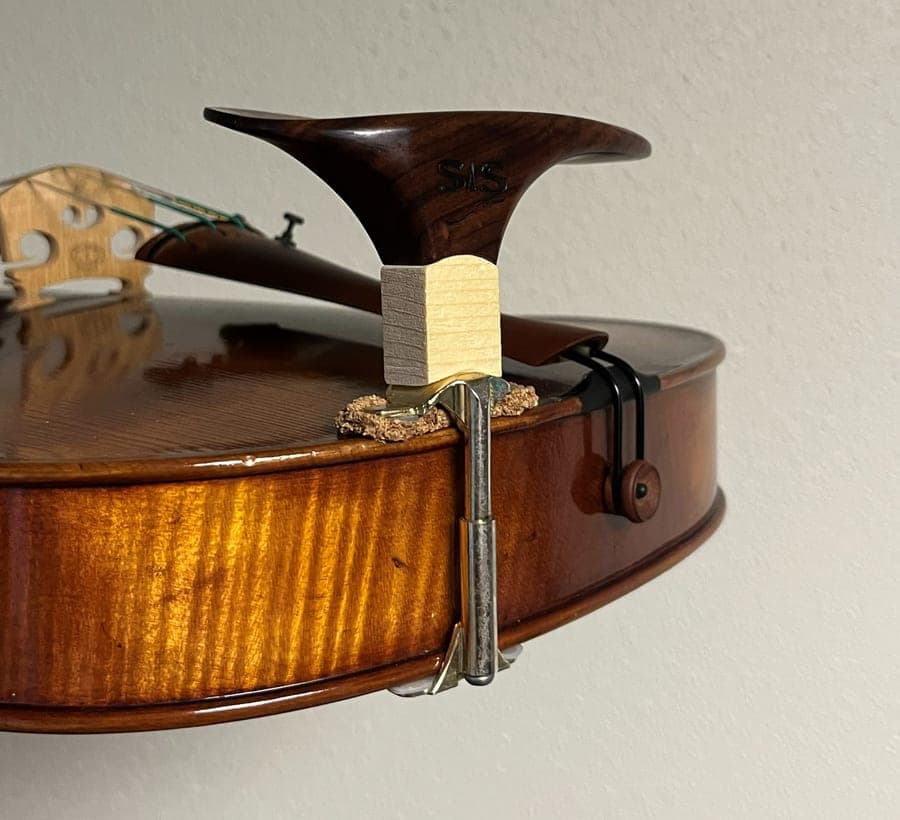
This was my setup three years ago. Each day was a science experiment: arranging foam pads, cloths folded and strapped down with rubber bands, and a Frankenstein chinrest I built in my garage, all with no relief from the discomfort.
You have probably done some version of this. Different shoulder rests, sponges, posture changes, and chinrest explorations, likely with limited success. Each one is a tie-down cable, holding one problem still briefly while the cause stays untouched.
The bridge’s trouble was not that it moved. It was that it moved in ways nobody designed for.
Your body moves too. Whether you grow 6 inches in 3 years (like I did), put on a winter coat for a chilly day, or simply wake up with a sore neck, your body’s needs change daily. A good setup is designed for that: built to adjust, designed to Embrace.
Play freely,