Practice
Internal and External Blockers
October 3, 2026
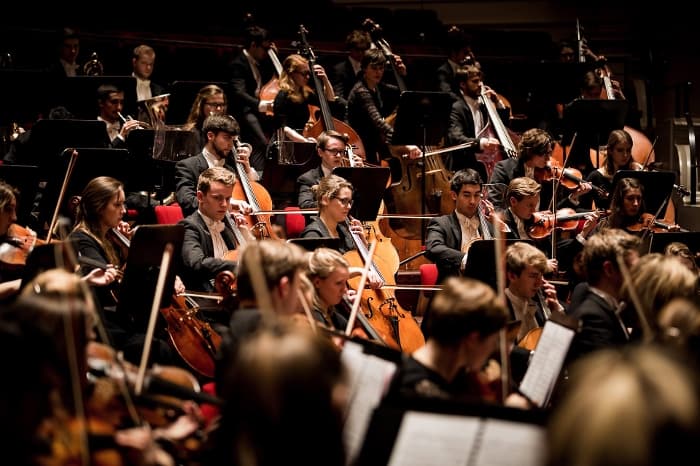
This past weekend, I got to play an amazing concert, including Beethoven's Eroica, Mendelssohn's Hebrides Overture, and the Jenkins Euphonium Concerto (which I highly recommend, especially if you've never heard a euphonium concerto before).
I got the call to perform just a week before the concert, so it was a quick turnaround to learn all the music for the first time. As my first concert since graduating college, it was also a time crunch I'd never had to deal with before.
As a college student, I likely would have gone straight to the practice room and ground through the music for hours, but working full time and building Embrace, that wasn't an option. Time was a roadblock standing in the way of my ability to fully prepare.
This experience got me thinking about the different types of blockers that inhibit us from playing. The way I see it, there are two types: internal and external.
External blockers are things outside of your control that keep you from reaching your potential. This weekend, limited practice time due to life and work was the external blocker. In other cases, a loud practice room with bright, hospital lighting and thin walls might be an environmental blocker. Or a physical limitation, like a setup that doesn't fit your body, can stand between you and your full potential.
The internal kind is our own voice, the one in our head telling us we're not good enough. In The Inner Game of Music, Barry Green and Timothy Gallwey describe two types of "self" that impact our potential. Self 1 voices criticism and doubt, placing little blockers on the way to our best performance. Self 2 is the part of you that plays freely. When it's unblocked from Self 1's sabotage, Self 2 unlocks our full potential.
Internal and external blockers are not equal. External blockers are often the first layer to potential. Until they're dealt with, it's hard to even see the internal ones. However, internal blockers are often where the biggest improvements are made.
To me, tackling the internal blockers is where I find the joy in music. But until I addressed the external stressors standing in the way, I couldn't find the freedom in playing I truly wanted.
Play freely,